Table of contents
Small boutiques are punching above their square footage, and in 2026, that matters more than ever, as retail vacancies, rising urban rents, and the algorithmic sameness of online shopping reshape how trends are born. The most reliable early signals of what people will wear next are often not runway shows or viral hauls, but the micro-decisions made inside tight stores, where buyers curate risk, staff translate subcultures, and customers test new looks in real time. Watch the small spaces, and you often see the future first.
Where trends start: the five-square-meter lab
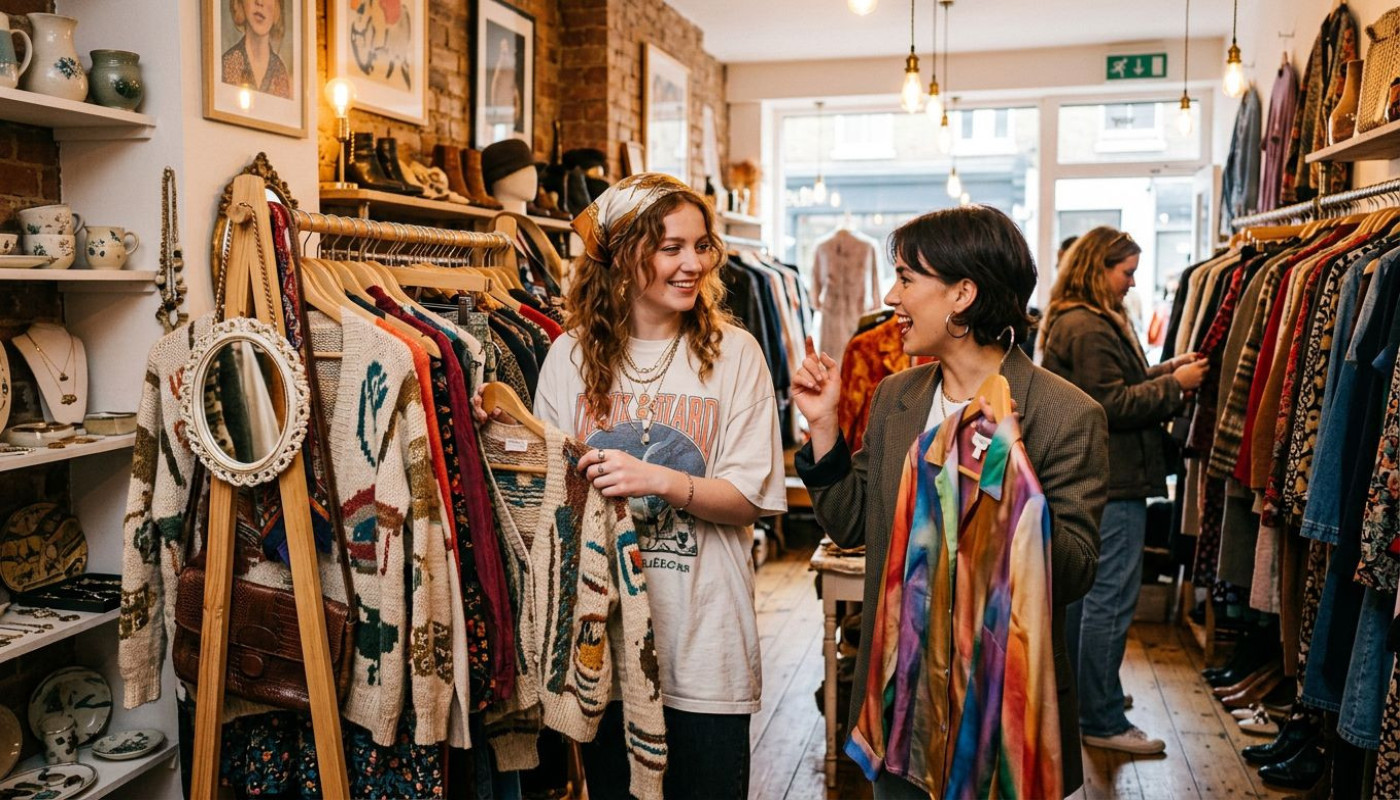
Forget the idea that trend formation is a top-down broadcast; in many cities, it behaves more like a feedback loop, and small boutiques are the places where it tightens. A limited floor plan forces selection, and selection forces a point of view, so the store becomes a live editorial page: what’s hung at eye level, what’s paired on mannequins, what staff suggest, and what regulars actually buy. Retail analysts have long tracked the shift from “seasonal” fashion to faster, more fragmented cycles; edited multi-brand boutiques compress that cycle further, because they are built to test and adjust quickly, often with short buying windows, low minimum orders, and rapid re-merchandising based on daily sell-through rather than quarterly planning.
There are measurable reasons these small spaces can move culture. First, scarcity is structural: a boutique might carry three sizes, two colorways, and a handful of units, creating immediate visibility around what is “hard to get,” which is one of the oldest accelerants in fashion. Second, the customer interaction is denser: sales associates remember preferences, and regulars trade information, so the store becomes a node where taste communities converge. Third, the product mix is often closer to street-level innovation: independent labels, niche imports, capsule drops, and remade or upcycled pieces appear here earlier than they do in chains, where global scale requires predictability and deep stock. In other words, the boutique’s constraint is its advantage, and when you are watching for early signals, constraints filter noise better than abundance.
Look at how trend researchers and major platforms have started to formalize the hunt for weak signals. WGSN, one of the best-known forecasting firms, has built a business on identifying emerging shifts before they reach the mass market, while edited retailers increasingly use near-real-time data such as sell-through velocity, returns, and conversion to calibrate buys. Even the resale economy reinforces the boutique effect: ThredUp’s 2024 Resale Report projected the secondhand market would more than double by 2028, reaching $350 billion globally, and secondhand behavior trains shoppers to value uniqueness, provenance, and “finds.” Small boutiques sit at the intersection of those desires, acting as discovery engines that can validate a style movement before it becomes a hashtag, and sometimes before brands themselves recognize what they have on their hands.
The street tells you first, if you listen
Street style has been photographed for decades, yet the mechanics of how it forms are shifting. Social media still amplifies, but it rarely invents from nothing; it accelerates what already has momentum in physical communities. The small boutique is where that momentum becomes legible, because you can literally see the adoption curve: the first few customers taking a chance, the staff adapting styling advice, the return visits to buy the same silhouette in a new color, and then the moment the look spreads beyond insiders. That is trendspotting at ground level, and it is why certain districts, even in an age of global e-commerce, still matter disproportionately.
Consider places that function as style laboratories: neighborhoods with dense youth culture, music venues, art schools, and tourist foot traffic create the conditions for fast iteration. Retail is not just “selling” there; it is participating. A boutique that carries experimental cuts, playful accessories, or subculture-coded graphics can anchor a local look, and once visitors photograph it, wear it home, and replicate it, the signal travels. What looks like spontaneous virality is often the aftershock of something tested in-store, because the boutique provided the initial curation and the social proof. If you want to understand how these ecosystems work, and why certain areas keep generating new aesthetics despite their small geographic footprint, click here for more.
There is also a demographic and economic angle that is easy to miss. Large retailers often optimize for the median customer, but boutiques can serve micro-markets: students with limited budgets who still want distinctiveness, collectors who spend on statement pieces, and tourists seeking items that signal they were “there.” This segmentation creates a diversified demand base inside a small radius, which helps explain why boutique districts can survive shocks that hit mainstream retail hard. In the United States, for example, the Census Bureau has repeatedly shown the long-run growth of e-commerce as a share of total retail sales, yet brick-and-mortar persists in categories where experience and fit matter, and fashion remains one of the clearest cases. When the value is discovery, not just transaction, the street still speaks first.
How buyers turn risk into a movement
Buying for a small boutique is not a watered-down version of buying for a department store; it is a different discipline, closer to cultural editing than inventory management. The buyer’s job is to place a series of calculated bets under tight constraints: limited cash flow, limited space, and often limited time between seeing a product and deciding. That pressure can produce sharper choices, and sharper choices are exactly what trends need at the beginning, when the look is still ambiguous and the audience small. A boutique that chooses one daring silhouette instead of ten safe ones can give that silhouette oxygen, simply by placing it in front of the right people repeatedly.
Data plays a role, but it is not only spreadsheets. Small retailers track sell-through, basket size, and repeat visits, and many now rely on modern point-of-sale systems that make daily reads possible; still, they also collect “soft data” at a level chains rarely can. Customers say why they hesitate, what they saw on a friend, what they refuse to wear, and what they would buy if it came in a different fabric. Staff hear these signals all day, and when the store is small, feedback travels fast to the person who can act on it. That is why a boutique can pivot in weeks, while larger organizations might need a season. In a world where attention shifts in days, speed matters.
The economics of drops and capsules also favor boutiques. Limited releases create urgency, and urgency can concentrate adoption, which is how a style becomes visible enough to copy. When a handful of tastemakers buy into a look at the same time, it photographs well, and photography is the currency of fashion diffusion. Add to that the rising normalization of customization, repair, and upcycling, and the boutique becomes a place not only to buy but to tweak, altering hems, swapping buttons, and styling pieces in-store to create something that feels personal. The resale boom underlines this appetite for uniqueness; when the secondhand market is projected to surge, consumers are trained to hunt, compare, and pounce, and boutiques that stage newness with scarcity tap directly into that mindset.
Small stores, big impact on city retail
The boutique story is also an urban story, because these stores can act as anchors for street-level vitality when larger formats retreat. Vacant storefronts change foot traffic patterns, and foot traffic changes everything from safety perceptions to café revenues. Cities have been watching retail churn closely as costs rise, and policymakers increasingly talk about “activation” and mixed-use streets; boutiques, despite their fragility, often provide the kind of differentiated draw that makes a district worth visiting. When several boutiques cluster together, they create a circuit, encouraging longer visits and higher spillover spending, and that makes them more than isolated shops. They become infrastructure for cultural commerce.
There is also a tourism dimension that has grown sharper in the post-pandemic travel rebound. Travelers are less interested in buying the same items they could get at home, and more interested in local signals: exclusive collaborations, district-specific styling, and objects that carry story value. Boutiques deliver that, and when they do, they become content generators, because visitors document their finds. That content, in turn, feeds back into the district’s reputation, attracting more visitors and more brands looking for “authentic” placement. The loop can be self-reinforcing, but it is not automatic; it depends on curation quality, staff knowledge, and the district’s ability to keep rents from pushing out the very stores that made it desirable.
For readers trying to spot what comes next, the practical takeaway is simple: treat small boutiques as dashboards. Look for repeated silhouettes across different shops, not just one eccentric rack; notice when accessories lead the change, because bags, jewelry, and footwear often move before full outfits; pay attention to sizing and fit shifts, because they signal broader body and comfort politics. Ask what customers are trying on, not only what is displayed. Trends announce themselves quietly in small spaces, and then, once the signal is strong enough, the wider market catches up and sells it back to everyone at scale.
Planning a boutique crawl without wasting time
Set a clear route, and give yourself constraints; ironically, the same logic that powers boutiques helps shoppers, too. Pick one neighborhood, define a two-hour window, and decide what you are hunting for: a silhouette, a color family, a category like outerwear or accessories. Go early if you want staff attention, and go later if you want to watch what other customers actually buy. Bring the shoes you will walk in, and wear a base outfit that makes trying on fast, because speed is the difference between observing a trend and missing it when sizes sell out.
Budgeting matters, especially in districts where price points swing wildly between entry accessories and collectible pieces. Set a ceiling, then split it into “sure buy” and “maybe buy,” and keep a small reserve for the unexpected, because the best finds are rarely the ones you planned. Ask about returns and alterations before you commit, and if the store offers tailoring, use it; fit is where many trends live or die. If you are traveling, check tax-free shopping rules where applicable, and keep receipts organized. The smartest boutique crawl is part reporting, part shopping, and all about noticing what the street is already telling you.
What to watch next, and how to buy smart
Trends rarely arrive with a press release; they appear as clusters of choices, and boutiques are where those choices concentrate. To act on what you see, book fitting appointments when stores offer them, set a realistic spend, and ask about local perks such as tax-free schemes or city initiatives that support independent retail. The best buys are the ones you will wear, and the best clues are already on the racks.
Similar articles

When Small Changes Lead To Big Gains: Untapped Levers In Modern Workplaces

Maximizing Your Wins: Strategy Tips for Online Casino Success

How to invest in the stock market?

Essential information for new Kratom users
